
Posted by Jerry Dennis on Oct 19th 2026
EV & High-Voltage PPE for Collision Repair: Essential Electrical Safety Gear for Modern Auto Body Shops
Protect Your Technicians, Prepare Your Shop, and Work More Safely Around Electric and Hybrid Vehicles
Is Your Collision Repair Shop Ready for High-Voltage Electric Vehicles?
Electric vehicles (EVs) and hybrid vehicles are changing the collision repair industry. As more battery-powered vehicles enter repair facilities, auto body technicians are encountering high-voltage electrical systems that require specialized tools, protective equipment, and safety procedures.
Unlike traditional gasoline-powered vehicles, EVs and hybrids can contain high-voltage battery systems, power electronics, electrical cables, and components that present serious electrical hazards—even when a vehicle appears to be turned off.
For collision repair professionals, EV personal protective equipment (PPE) is an important part of preparing for these challenges.
At Grade A Tools, we help collision repair facilities find professional electrical safety equipment, insulated protective gear, and specialized tools for working around electric and hybrid vehicles.
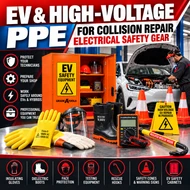
From high-voltage insulating gloves to EV safety cabinets and dielectric boots, our equipment selection helps shops build a more organized and safety-conscious EV repair environment.
EXPLORE EV & HYBRID SAFETY EQUIPMENT AT GRADE A TOOLS
Why High-Voltage PPE Matters in Collision Repair
Collision damage involving electric and hybrid vehicles can introduce hazards that are not immediately visible.
High-voltage wiring may be damaged, battery enclosures may be compromised, and electrical components may remain energized until properly isolated and verified.
An EV battery system can also retain stored electrical energy after the vehicle has been shut down.
These conditions make it essential for repair facilities to develop appropriate safety procedures before performing work that could expose technicians to energized components.
Common High-Voltage Hazards in Auto Body Shops
Potential hazards include:
-
Electrical shock: Contact with energized high-voltage components can cause serious injury or death.
-
Arc flash: Electrical faults can produce intense heat, light, and potentially dangerous pressure effects.
-
Damaged electrical cables: Collision damage may compromise cable insulation and protective coverings.
-
High-voltage battery damage: Impact damage may create electrical and thermal hazards.
-
Unexpected energization: Improper isolation or verification procedures can expose technicians to dangerous electrical energy.
-
Emergency response complications: Damaged high-voltage vehicles may require special isolation, rescue, and incident-response procedures.
Proper PPE helps reduce certain risks, but protective equipment alone does not make a vehicle safe to repair.
Technician training, OEM repair instructions, electrical hazard assessment, high-voltage isolation procedures, and appropriate testing equipment are all essential.
Class 0 Electrical Insulating Gloves: Essential Protection for EV Technicians
One of the most important categories of EV electrical safety equipment is properly rated rubber insulating gloves.
These gloves provide an insulating barrier against accidental electrical contact when selected, inspected, maintained, and used according to applicable requirements.
Featured Product: Rubber Electrical Insulating Gloves Kit – Class 0
Grade A Tools offers the Rubber Electrical Insulating Gloves Kit, Class 0, 11 Inches, Yellow, Size 11.
Class 0 insulating gloves have a maximum use voltage rating of 1,000 volts AC and 1,500 volts DC, subject to applicable standards and manufacturer instructions.
This type of protective equipment may be appropriate for certain EV and hybrid service procedures when the voltage rating and other safety requirements have been verified.
Important features to look for include:
-
Properly rated rubber insulating gloves
-
Compatible leather protectors when required
-
Suitable glove sizing and fit
-
Inspection and testing provisions
-
Protective storage that helps prevent damage
Insulating gloves must be inspected before use, including appropriate air testing, and must remain within required electrical testing intervals.
Under OSHA requirements, rubber insulating gloves generally require electrical retesting every six months while in service, along with testing under other specified circumstances.
SHOP CLASS 0 ELECTRICAL INSULATING GLOVES
Class 0 vs. Class 1 Electrical Insulating Gloves
Selecting the correct voltage rating is essential.
Class 0 gloves are rated for maximum use at 1,000V AC, while Class 1 gloves are rated for maximum use at 7,500V AC.
Grade A Tools also offers a CyberTruck Compliant Rubber Electrical Insulating Glove Kit, Class 1, along with Class 1 replacement gloves.
The appropriate glove classification must be determined from the actual electrical exposure, manufacturer requirements, and repair procedure—not solely from the vehicle model.
VIEW EV ELECTRICAL INSULATING GLOVES AND PPE
Complete EV Repair Safety Cabinet Package: Organize Your High-Voltage PPE
As more collision repair shops expand their capabilities to include electric and hybrid vehicles, organizing electrical safety equipment becomes increasingly important.
Keeping protective equipment together in a clearly identified storage location can help shops maintain better inventory control and inspection practices.
Featured Product: EV Repair Safety Cabinet Package – GAT-EV-1100
The Grade A Tools EV Repair Safety Cabinet Package combines a high-visibility orange storage cabinet with a selection of electrical safety equipment.
The listed package includes:
-
Class 0 rubber insulating gloves kit
-
Insulated rescue hook with sign
-
Dielectric steel toe boots
-
EV-specific insulation and OHM meter
-
Arc flash face shield
-
Safety cone package
-
Safety identification decals
-
Safety hat package
-
Lockable orange storage cabinet
The cabinet measures approximately 72 inches high, 36 inches wide, and 18 inches deep, with adjustable storage shelving.
Why an EV Safety Cabinet Makes Sense
A dedicated EV safety cabinet provides several organizational advantages.
Centralized storage: Keep important PPE and tools in a consistent location.
High visibility: The orange cabinet helps technicians identify the EV safety equipment storage area.
Improved accountability: An organized storage system makes it easier to monitor inspection schedules and identify missing equipment.
Professional shop presentation: A designated EV safety station can support a structured electrical safety program.
Convenient access: Technicians know where to locate properly maintained equipment when it is needed.
A complete cabinet is a practical starting point, but the contents must still be evaluated against the specific vehicle manufacturer's requirements and the shop's electrical safety program.
VIEW THE EV REPAIR SAFETY CABINET PACKAGE
Dielectric Steel Toe Boots: Electrical Safety Footwear for EV Repair
Protective footwear is another important consideration for technicians working around electrical hazards.
Ordinary work boots are not necessarily designed or rated to provide the electrical insulation required for particular high-voltage tasks.
Featured Product: Steel Toe Dielectric Boots – EV Repair Safety Gear
Grade A Tools offers Steel Toe Dielectric Boots designed for automotive electrical safety applications.
The product listing identifies features including:
-
Electrical protection ratings and certifications
-
Steel toe protection against impact and compression
-
Slip-resistant outsoles
-
Waterproof construction
-
Durable materials for demanding shop environments
-
Suitability for selected EV service applications
The product information identifies an 18,000V electrical hazard test rating and additional footwear standards.
It is important to distinguish a laboratory test voltage from the actual maximum permitted working voltage. Footwear must be selected according to its applicable certification, manufacturer instructions, and the worksite hazard assessment.
Why Electrical Safety Footwear Is Important
Repair technicians may work around damaged battery systems, electrical cables, conductive shop floors, vehicle lifts, and metal repair equipment.
Properly selected protective footwear can help reduce certain electrical risks while also offering physical protection in a busy repair environment.
Dielectric footwear is not a substitute for properly insulating, isolating, and verifying the high-voltage system before work begins.
SHOP STEEL TOE DIELECTRIC BOOTS
Insulated Rescue Hooks: Prepare Your Shop for Electrical Emergencies
Electrical emergency preparedness is another important component of EV collision repair safety.
When working around high-voltage equipment, repair facilities should establish rescue procedures before an incident occurs.
Featured Product: Insulated Rescue Hook for Electric Vehicle Repairs – 4½ Foot
Grade A Tools offers an insulated rescue hook intended for electrical emergency response applications.
The hook is designed to help a properly trained responder move a person or object away from electrical hazards in circumstances permitted by the equipment instructions and emergency response plan.
Potential benefits include:
-
A designated electrical emergency response tool
-
An insulated design for specified electrical applications
-
Additional reach compared with direct contact
-
Convenient placement near designated EV repair areas
-
Support for a shop's written emergency response plan
A rescue hook does not make direct contact with energized equipment automatically safe. Responders must follow their training, ensure the rescue method is appropriate, and avoid entering an unsafe electrical exposure area.
LEARN MORE ABOUT EV INSULATED RESCUE HOOKS
High-Voltage Testing Equipment: Confirm Before You Touch
Before beginning work on high-voltage electrical components, qualified technicians must follow vehicle-specific procedures to establish and verify a safe electrical condition.
Simply turning off the ignition or disconnecting a low-voltage battery does not establish that a high-voltage system is safe.
Featured Product: Insulation and OHM Meter – Electric Vehicle (EV)
Grade A Tools carries an Insulation and OHM Meter for Electric Vehicle Repairs, designed for appropriate electrical testing applications.
Depending on instrument capabilities and OEM procedures, insulation-resistance testing may be used to evaluate electrical insulation integrity.
However, an insulation and OHM meter is not automatically a substitute for a properly rated voltage tester used to verify absence of voltage.
Technicians should use the exact test instruments specified by the vehicle manufacturer and verify that the equipment has the necessary ratings, functions, and condition for the procedure.
EXPLORE EV ELECTRICAL TESTING EQUIPMENT
EV Safety Cones, Chains, and Warning Signs: Establish a Safer Work Area
Electrical safety doesn't stop with gloves and protective equipment.
A designated high-voltage work zone helps alert other employees, customers, and visitors to the presence of electrical hazards.
Featured Product: EV Safety Chain & Cone Kit – Professionals Package
Grade A Tools offers an EV Safety Chain & Cone Kit specifically designed for professional electric and hybrid vehicle repair environments.
The package features high-visibility cones, safety chains, and warning signs that can be used to identify restricted EV work areas.
These products help collision centers:
-
Mark designated EV repair zones
-
Warn personnel of high-voltage activity
-
Establish visible work-area boundaries
-
Organize battery service and isolation areas
-
Support electrical safety procedures
Featured Product: Electric Vehicle Repair Safety Cone Package 510
The GAT-SCP-510 Electric Vehicle Repair Safety Cone Package includes:
-
Three 28-inch safety cones
-
Two 18-inch safety cones
-
Ten reflective message collars
The reflective collars display cautionary messages intended to identify electrical hazards.
VIEW THE EV REPAIR SAFETY CONE PACKAGE
READ MORE ABOUT THE EV SAFETY CHAIN & CONE KIT
Understanding OSHA, ASTM, and NFPA Electrical Safety Requirements
High-voltage PPE selection should be based on applicable safety standards, workplace hazard assessments, and vehicle manufacturer requirements.
Important standards and guidance include:
OSHA 29 CFR 1910.137 – Electrical Protective Equipment
OSHA's electrical protective equipment requirements address the inspection, use, care, and testing of certain insulating equipment, including rubber insulating gloves.
Shops should establish procedures for identifying damaged equipment, maintaining inspection records, and ensuring required electrical testing is performed.
ASTM D120 – Rubber Insulating Gloves
ASTM D120 covers specifications for rubber insulating gloves used to protect workers against electrical shock.
Technicians and shop managers should verify glove classifications, manufacturer markings, testing status, and other relevant specifications.
NFPA 70E – Electrical Safety in the Workplace
NFPA 70E provides a framework for workplace electrical safety practices, including risk assessment, protective equipment selection, and methods for establishing electrically safe work conditions.
Applicable editions and requirements should be reviewed as part of the facility's safety program.
Vehicle Manufacturer Repair Procedures
EV collision repair facilities must also follow manufacturer-specific service information.
Requirements can differ among Tesla, Ford, General Motors, Rivian, Hyundai, Kia, BMW, and other vehicle manufacturers.
No single PPE kit should be assumed suitable for every electric vehicle or every high-voltage repair operation.
How to Build an EV Electrical Safety Program for Your Collision Shop
Equipping a facility for high-voltage repairs involves more than purchasing protective gear.
A practical safety program should address the following areas.
1. Technician Training and Qualifications
Ensure technicians performing high-voltage work receive the training and authorization required for their assigned responsibilities.
2. Proper PPE Selection
Evaluate the electrical hazards, exposure level, vehicle requirements, and equipment specifications before choosing gloves, shields, footwear, and other protective items.
3. Dedicated EV Repair Areas
Use appropriate cones, warning signs, and access restrictions to identify work areas where electrical hazards may exist.
4. Equipment Inspection and Maintenance
Document the inspection, electrical testing, maintenance, and replacement of protective equipment.
5. High-Voltage Isolation Procedures
Follow OEM instructions for disconnecting, isolating, and verifying high-voltage electrical systems.
6. Emergency Preparedness
Prepare for incidents involving electrical shock, damaged batteries, thermal events, and other EV-related emergencies.
7. Organized Equipment Storage
Use protective storage and designated equipment stations to keep inspected PPE readily accessible.
The goal is to create a repeatable safety process that technicians can follow consistently.
Frequently Asked Questions About EV High-Voltage PPE
What PPE is needed for electric vehicle collision repair?
Depending on the hazards and OEM repair requirements, shops may need voltage-rated insulating gloves, leather glove protectors, arc-rated face and body protection, dielectric footwear, and other specialized equipment.
Are Class 0 gloves suitable for EV repairs?
Class 0 gloves may be suitable for certain EV procedures when their maximum use voltage and other requirements meet the hazard assessment. Some procedures require higher-class gloves or additional protective equipment.
Do collision shops need a dedicated EV PPE cabinet?
A dedicated cabinet is not universally mandatory, but it provides an organized location for storing protective equipment and related electrical safety tools.
How often must electrical insulating gloves be tested?
OSHA generally requires rubber insulating gloves in service to be electrically retested every six months, with additional testing required under certain circumstances. Pre-use inspection is also required.
Can standard mechanic gloves protect against high voltage?
No. Standard mechanic gloves should not be relied upon for electrical insulation unless they are specifically designed, appropriately rated, and approved for the electrical hazard involved.
Are EV safety cones and warning signs necessary?
Clearly identifying and restricting hazardous electrical work areas is an important safety practice. The specific barriers and signs needed depend on applicable requirements and the worksite risk assessment.
Does an EV PPE kit make a collision shop ready to repair any electric vehicle?
No. PPE is only one part of an EV safety program. Technician qualifications, equipment, facilities, emergency preparedness, and OEM-approved procedures must also be considered.
Why Buy EV and High-Voltage Safety Equipment from Grade A Tools?
At Grade A Tools, we understand that collision repair facilities need professional equipment suited to modern vehicle repair requirements.
As a family-owned, Texas-based collision repair tool supplier operating since 2001, we serve auto body shops and automotive repair professionals throughout the United States.
Our EV and hybrid equipment selection includes:
-
Electrical insulating glove kits
-
High-voltage safety cabinet packages
-
Dielectric protective footwear
-
Insulated rescue hooks
-
Electrical testing equipment
-
EV safety cones, chains, and warning signage
-
Insulated hand tools and accessories
Whether you're introducing EV services to your collision center or updating existing high-voltage safety equipment, our team can help you identify available products and review their specifications.
Protect Your Technicians. Equip Your Shop. Prepare for the Future of Collision Repair.
Electric and hybrid vehicles represent an increasingly important part of the automotive repair industry.
Investing in properly selected high-voltage PPE, electrical safety tools, and organized equipment storage can support a safer and more prepared collision repair workplace.
From Class 0 electrical insulating gloves to complete EV repair safety cabinet packages, Grade A Tools offers products to help your facility address important safety equipment needs.
SHOP EV & HIGH-VOLTAGE PPE AT GRADE A TOOLS
Read Our Original Article: EV & High-Voltage PPE for Collision Repair | Electrical Safety Gear!
Grade A Tools – Professional Collision Repair Tools & Equipment
Website: https://gradeatools.com/
Phone: (800) 435-8543
Email: info@gradeatools.com
Safety note: Information is educational and does not replace qualified electrical safety training, equipment instructions, workplace hazard assessments, or vehicle manufacturer repair procedures. Product compliance and suitability must be verified for each application.